How the maramataka is derived from sun, stars, moon and more.
Maramataka is the Māori lunisolar calendar, commonly mistaken as the ‘lunar’ calendar. Not only does the maramataka interpret phases of the moon, it is also understood in the context of sun position, star constellations, and phenology of flora and fauna.
The sun is the tohu (indicator) for season because it rises across the eastern horizon between northeast and southeast depending on the time of year. At the winter solstice, the sun is rising at its furthest northeast, crossing due east at spring and autumn equinox, and finally reaching southeast at the summer solstice.
The stars are tohu for month because as the Earth orbits the sun, Māori identify new constellation rising on the eastern horizon before the sun (called heliacal stars) to indicate a new month. The Māori new year begins with the rising of Matariki before the sun on the eastern horizon, aligned with the following appearance of the Tangaroa moon phase.
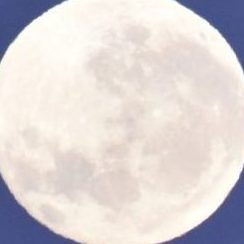
The moon is the tohu for day, and also includes interpretations of a general guide for activities. The moon at Rākaunui (full moon) and Whiro (new moon) has the greatest gravitational force on Earth’s ocean and therefore often not the best time for fishing. Some phases are better for planting (water retention in the soil), and hunting (some animals more active in low light) as a few examples. Note that Māori communities have their own understanding of the environment because it is a very location-specific world of knowledge.
The observation of flora and fauna phenology during each of these tohu throughout the year also offers an indication of the time of year and appropriate timing for planting, harvesting, planning, hunting and celebrations, due to natural environmental factors of soil fertility, productivity, warmth, animal migration, spawning, among others.
 Alyssa in Antarctica
Leave a comment